txSync
txSync brought asset management, transaction sponsorship, and smart-account automation into one platform on ZKsync Era. At txFusion, I worked across Portal, Tsuko, and Visor—products that approached the same challenge from different directions: making blockchain capabilities easier to use.
This collection brings together my work across the platform, from its everyday wallet experience to tools for managing transaction fees and recurring actions. Together, these products connected what people wanted to do with the infrastructure that made it possible.
- my role
- Software engineer
- focus
- Portal & Bridge, Tsuko paymasters & Visor smart accounts
A wallet balance is only one part of using a blockchain application. People also need to move assets between networks, understand transaction fees, and follow what happens after they confirm an action. Developers face another set of questions: how to cover those fees, manage a budget, or make recurring actions possible.
txSync brought these needs together. Portal and Bridge supported everyday asset management and transfers. Tsuko gave teams tools to configure and manage paymasters—services that sponsor transaction fees or let users pay them with supported tokens. Visor extended smart accounts with plugins for automated actions.
The shared challenge was giving each product a clear purpose while making the platform feel connected. A fee option in a transfer flow and the dashboard funding that option were different sides of the same experience.
My work at txFusion spanned Portal, Tsuko, and Visor. Bringing them together here shows the breadth of that work: a platform serving both the person making a transaction and the teams configuring the tools behind it.
The following chapters follow those product journeys, from managing assets to managing fees and setting up automation.
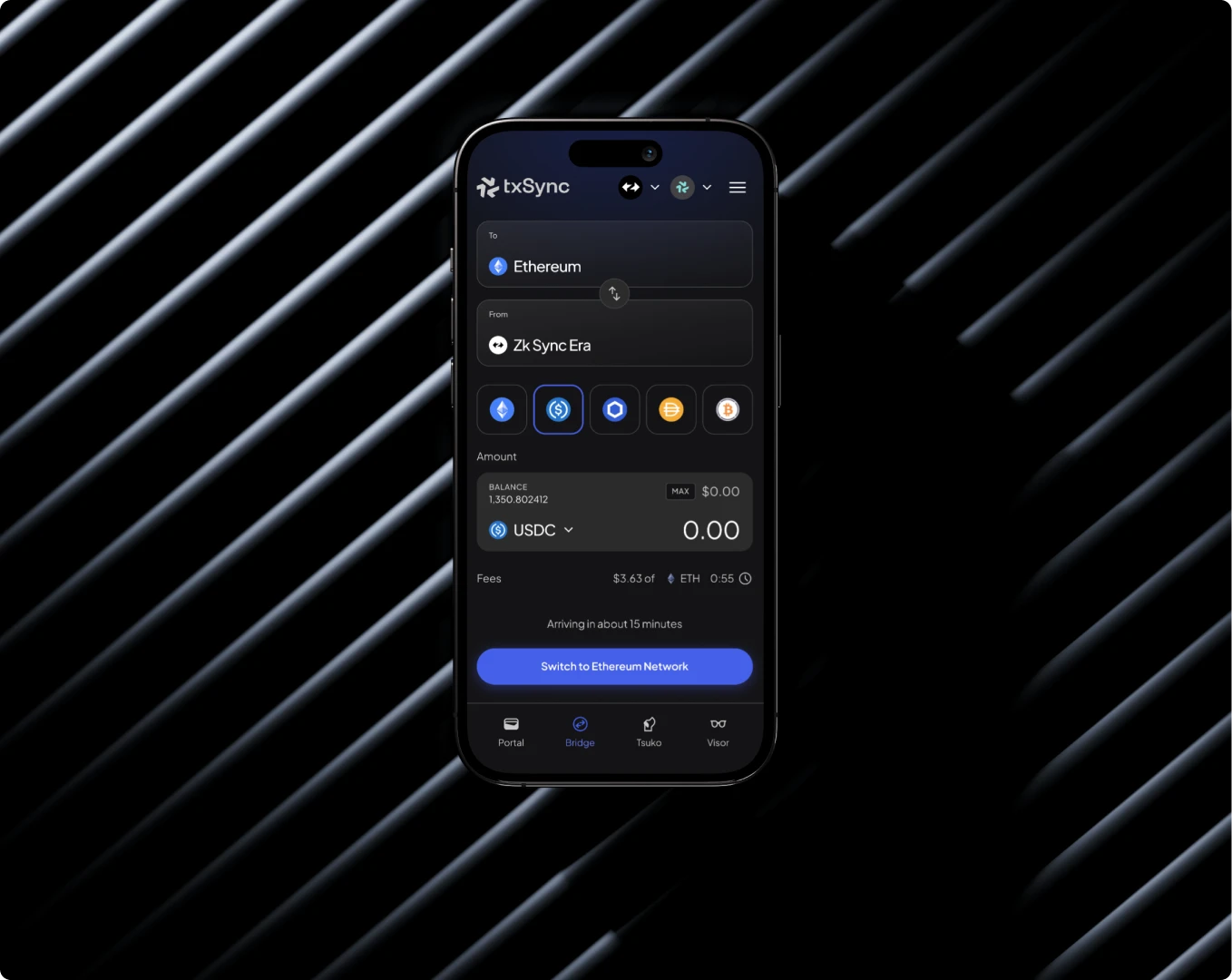
Portal organized balances, transaction history, and contacts around a connected wallet. Its asset overview made holdings visible at a glance, with options to send, receive, and hide zero balances. Bridge handled the journey between Ethereum and ZKsync Era, with a direction switch and token selection in the same product environment.
The send flow separated recipient, amount, and review into distinct steps. Fee selection introduced another possibility: paying with a supported token or using an eligible NFT-based sponsorship. The desktop and mobile views below show Bridge’s network selection, token inputs, and fee information across different screen sizes.
Explore the Portal & Bridge guide ↗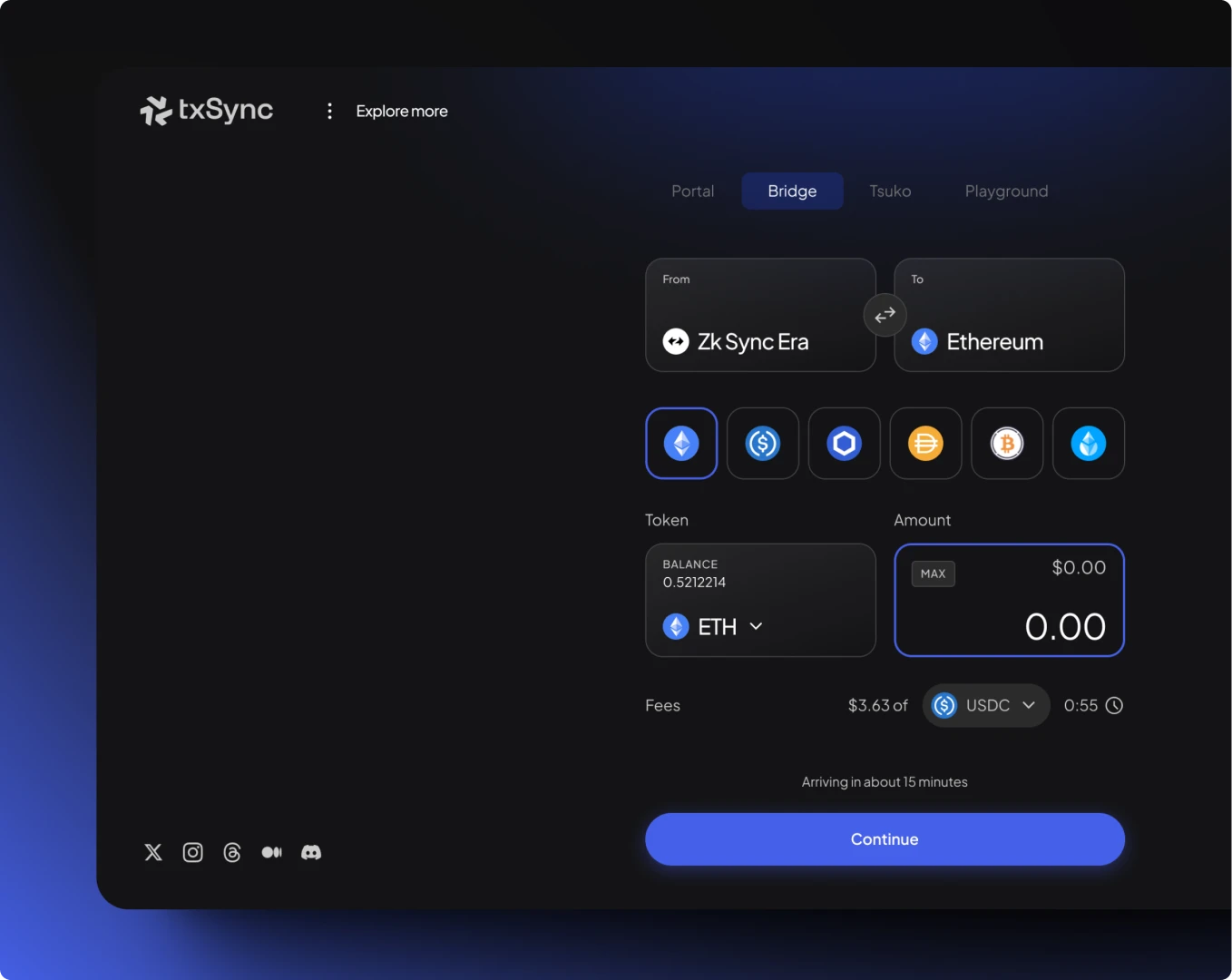
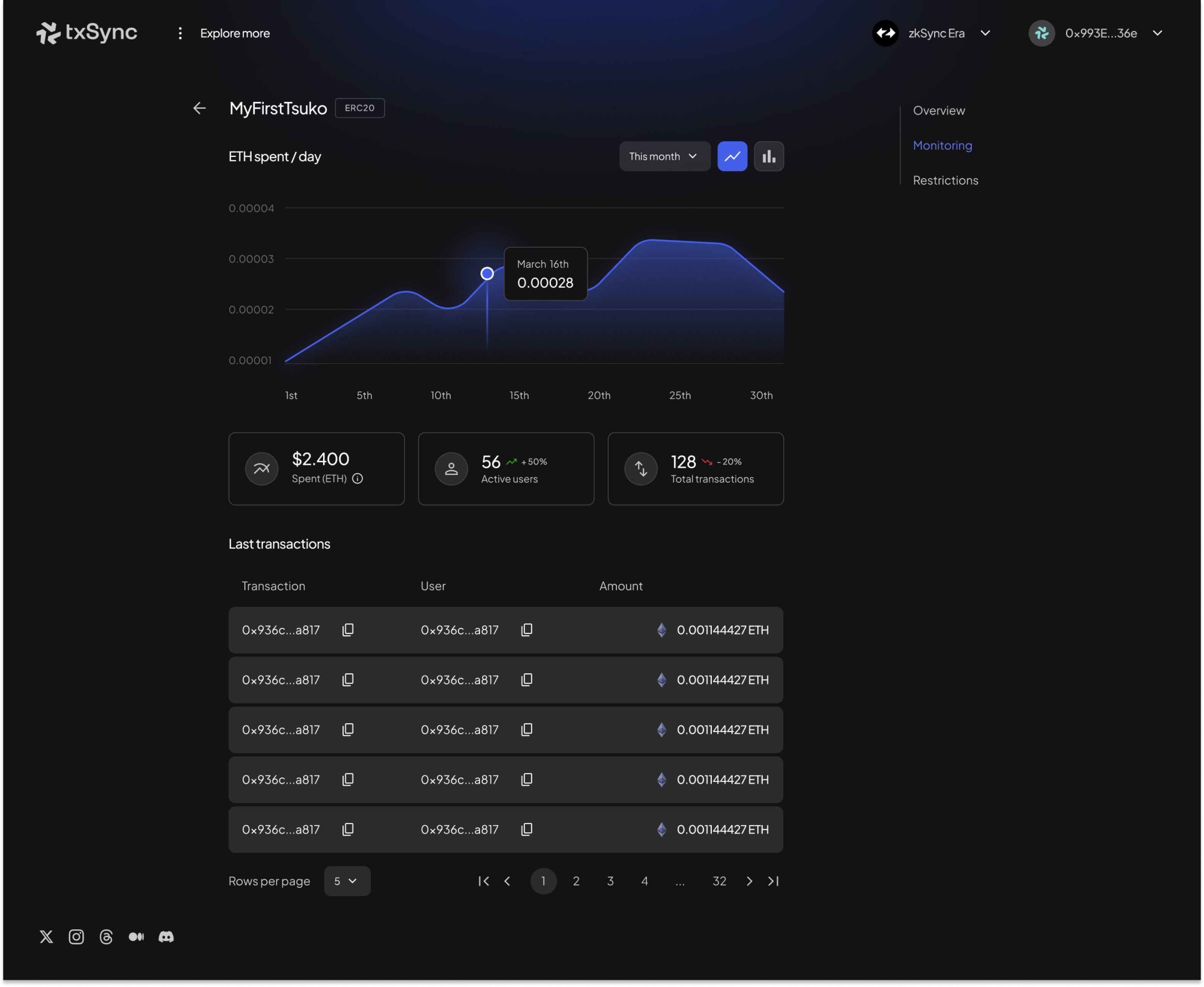
Tsuko put paymaster configuration into a dedicated interface. Teams could choose a sponsored or ERC20 paymaster, configure it, and review the deployment. Sponsored paymasters covered users’ fees; ERC20 paymasters enabled payment with a configured token.
After setup, the dashboard brought balances, deposits, withdrawals, and integration guidance together. Monitoring views showed spending over time, active users, and transaction history. Extensions added conditions such as NFT ownership, connecting a team’s sponsorship rules with the fee options people encountered in Portal.
These screens show the operational side of a simpler transaction experience: the funds, configuration, and visibility needed to keep it running.
Explore the Tsuko launch article ↗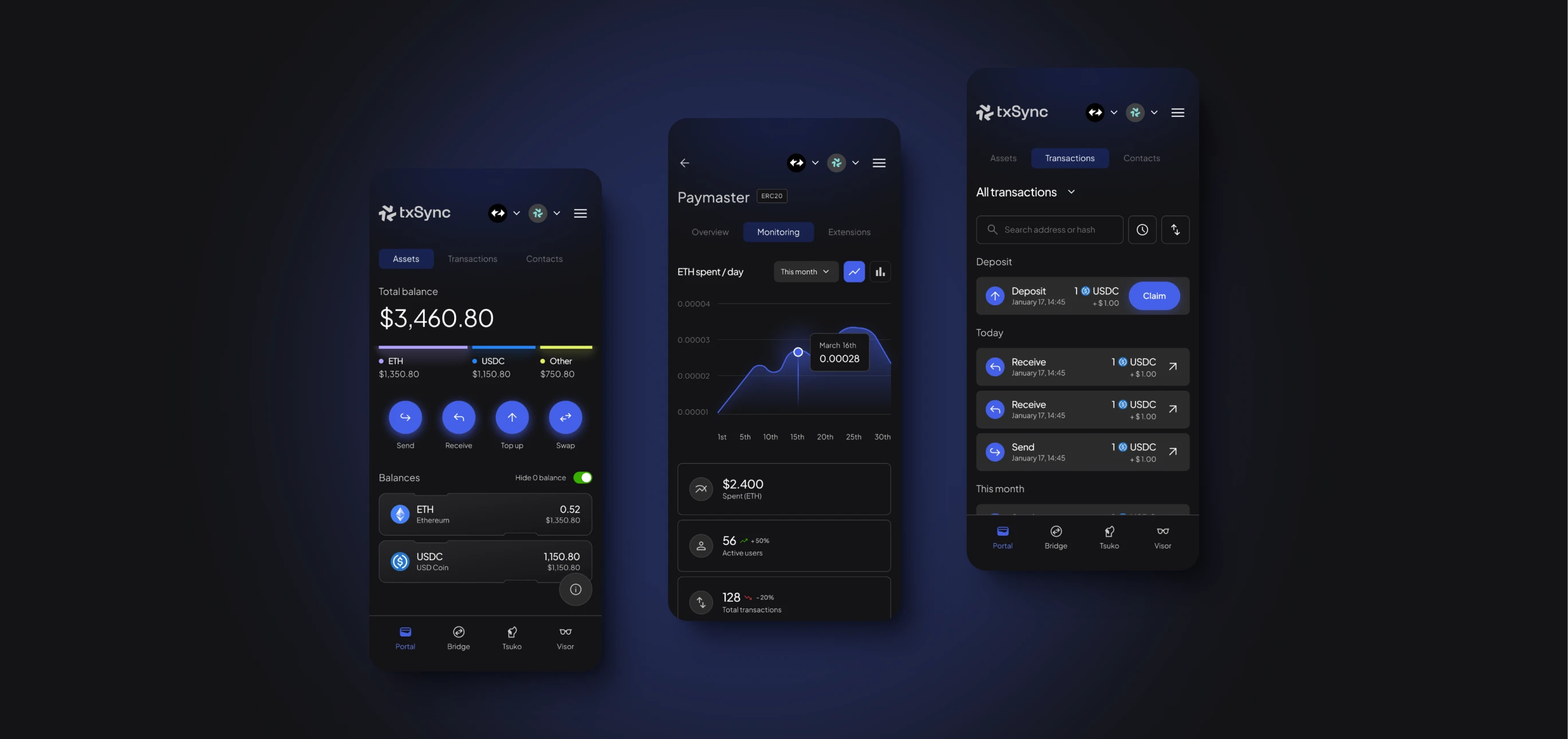
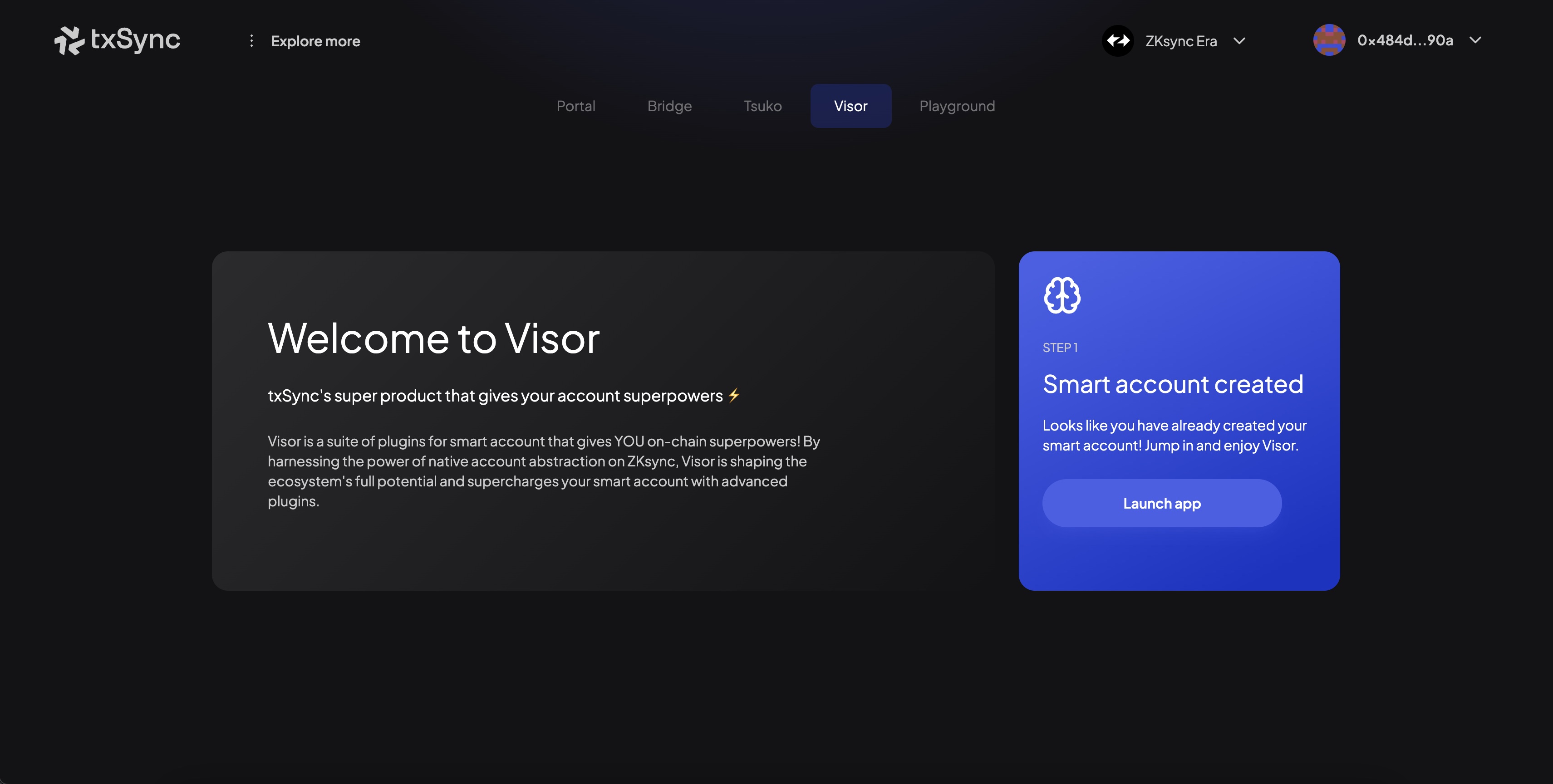
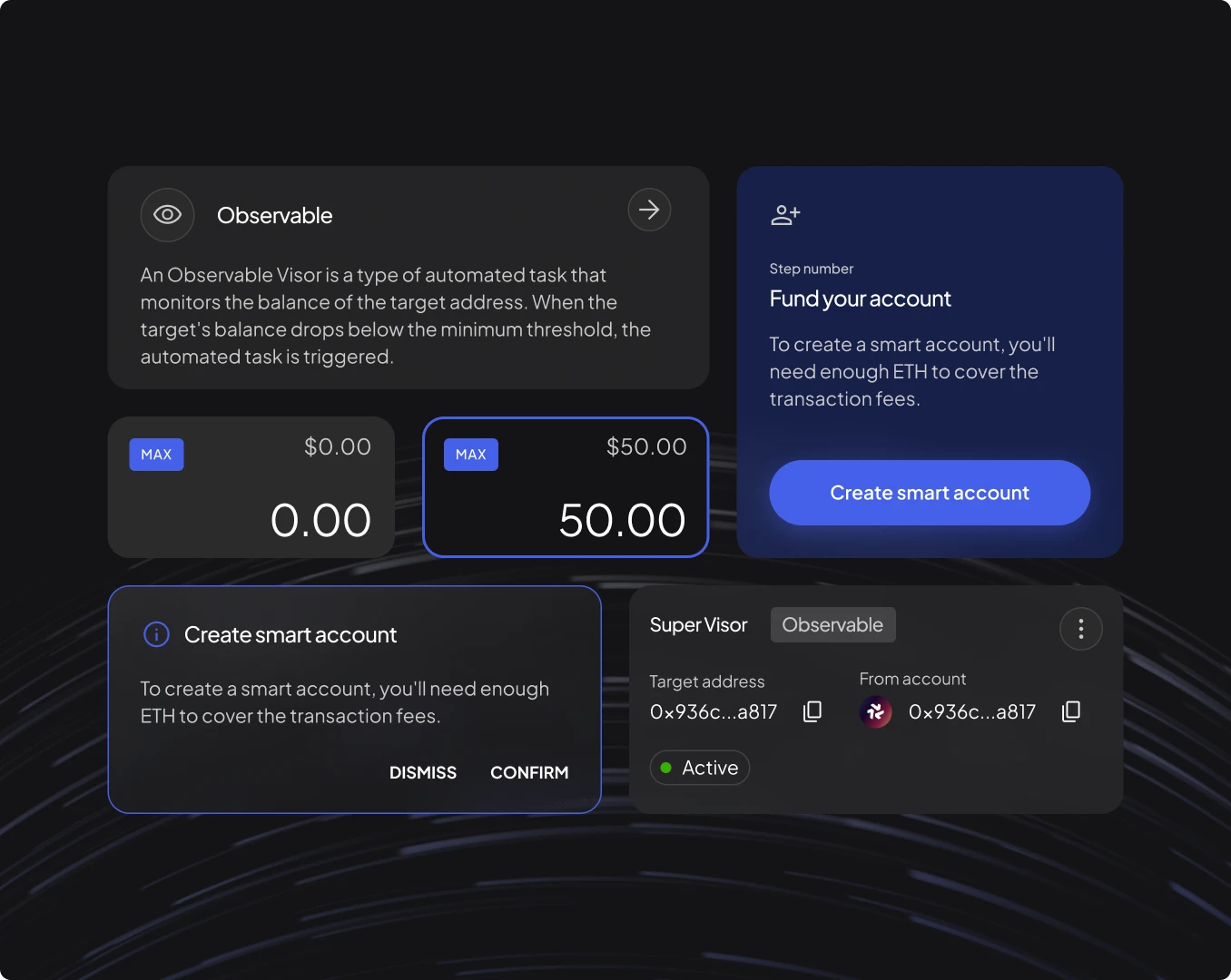
Visor used ZKsync’s native account abstraction to extend smart accounts with plugins. The starting journey moved through creating an account, funding it, and installing a plugin. Its recurring plugin supported scheduled payments and paymaster top-ups, with tasks configured around a destination, amount, and frequency.
That made setup and ongoing visibility equally important. The account overview brought funds and installed plugins together, while task views exposed the details behind each automation. The visuals below show the welcome experience alongside account funding guidance, confirmation messages, and the status of an automated task.
Explore the Visor setup guide ↗